Neurons communicate with each other via electrical impulses, which are produced by ion channels.
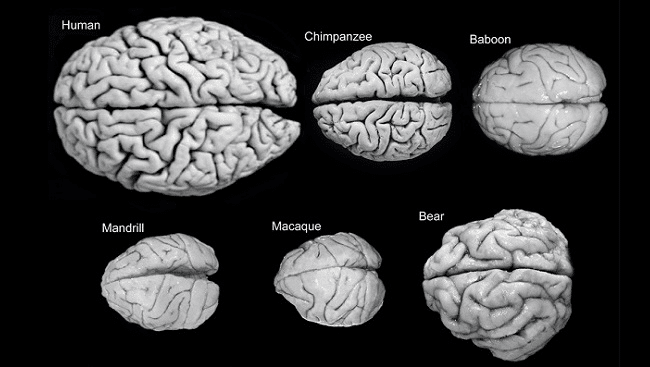
A team of scientists from MIT compared layer 5 pyramidal neurons in the cortex of 9 mammalian species and in humans. In 9 of the 10 species they observe conserved conductance of ions channels (calcium, potassium, sodium) except for the human neurons.
One of the authors explained: “What it looks like the cortex is trying to do is keep the numbers of ion channels per unit volume the same across all the species. This means that for a given volume of cortex, the energetic cost is the same, at least for ion channels.”
It takes energy to pump ions through dendrites, the humans figured out a way to become more energetically efficient. Having a much smaller number of these channels than expected could mean that the human brain can operate more efficiently, diverting resources to more complex cognitive functions.
Beaulieu-Laroche, L., Brown, N.J., Hansen, M. et al. Allometric rules for mammalian cortical layer 5 neuron biophysics. Nature (2021). Published 10 November 2021
