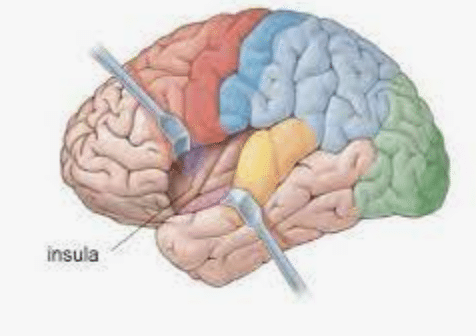
The insula is a structure we study in Brain 1 (B1), deeply folded on the side of the brain cortex, that is known to have many functions including supporting the body’s homeostasis, ANS regulation, interception, emotions modulation, etc…
In a new interesting study researchers induced inflammation in mice (colitis/peritonitis), localized the reaction in the insular cortex and then triggered the neurons in the insula that were active during the initial inflammation.
They found that:
– Parts of the insular cortex are activated during peripheral inflammation
– Once the mice were healthy, reactivation of these insular neurons can re-stimulate peripheral inflammation
– Inhibition of these parts of the insular cortex lessens inflammation
The fact that reactivation of these insular neurons was sufficient to broadly retrieve the inflammatory state possibly relate to psychosomatic disorders which are described as diseases with no apparent biological cause
One of the author explained: “There are evolutionary advantages to such a connection…The body needs to respond to infection as quickly as possible before the attacking bacteria or viruses can multiply. If certain activity, for example consuming particular foods, has exposed the body to infection and inflammation once, there is an advantage to gearing up for battle when one is about to engage in the same activity again. A shorter response time would allow the body to defeat the infection faster and with less effort. The problem of course is when such an effective mechanism goes out of control and can on its own generate the disease.”
If this model can be translated to humans, it may open new therapeutic avenues for chronic inflammatory conditions, autoimmune conditions and conceivably known psychosomatic disorders.
Koren T, Yifa R, Amer M et al. Insular cortex neurons encode and retrieve specific immune responses. Cell. November 08, 2021.
