In vertebrate anatomy the sacrum (plural: sacrums or sacra) is a large, triangular bone at the base of the spine and at the upper and back part of the pelvic cavity, where it is inserted like a wedge between the two hip bones. Its upper part connects with the last lumbar vertebrae and bottom part with the coccyx (tailbone). It consists of usually five initially unfused vertebrae which begin to fuse between ages 16–18 and are usually completely fused into a single bone by age 26.
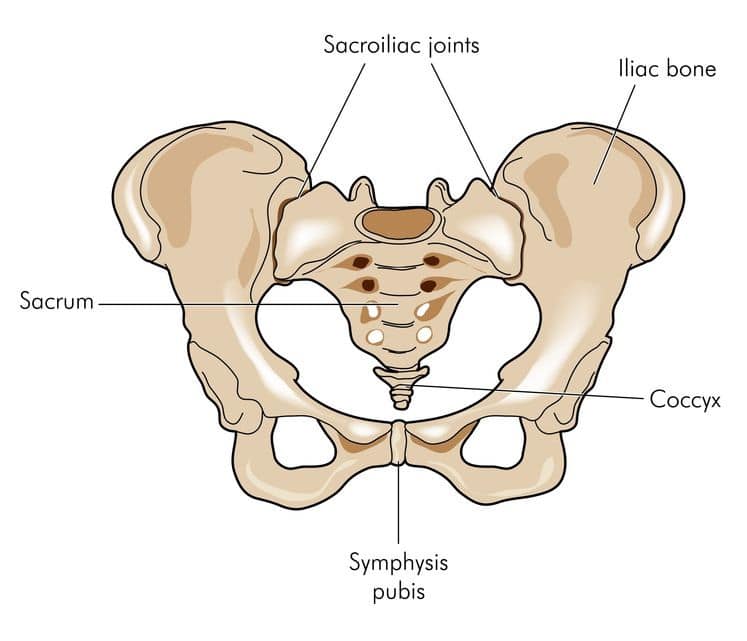
It is curved upon itself and placed obliquely (that is, tilted forward). It is kyphotic — that is, concave facing forwards. The base projects forward as the sacral promontory internally, and articulates with the last lumbar vertebra to form the prominent sacrovertebral angle. The central part is curved outward towards the posterior, allowing greater room for the pelvic cavity.
The name is derived from the Latin (os) sacrum, (sacer, sacra, sacrum, “sacred“), a translation of the Greek hieron (osteon), meaning sacred or strong bone. Since the sacrum is the seat of the organs of procreation, animal sacrums were offered in sacrifices. In Slavic languages and in German this bone is called the “cross bone”.
Many disorders and irritations can be relieved using CranioSacral Therapy, including:
- Migraine Headaches
- Chronic Neck and Back Pain
- Colic
- Autism
- Central Nervous System Disorders
- Orthopedic Problems
- Traumatic Brain and Spinal Cord Injuries
- Scoliosis
- Infantile Disorders
- Learning Disabilities
- Chronic Fatigue
- Emotional Difficulties
- Stress and Tension-Related Problems
- Fibromyalgia and other Connective-Tissue Disorders
- TMJ Disorders
- Neurovascular or Immune Disorders
- Post-Traumatic Stress Disorder
- Post-Surgical Dysfunction
