So you want to know more about compression garments…
Do you occasionally swell when it is hot out or when you fly? Do you wake up with ‘normal’ ankles and then go to bed with puffy, swollen ankles? Do your socks dig into your ankles and legs at the end of the day? Do you come home with tired, achy, itchy, heavy, sore, or swollen legs? Do you have spider or varicose veins? Have you had 2 or more pregnancies with ankle swelling?
If you answered ‘YES!’ to any of the following, then you might need compression socks! Hundreds of thousands of men and women suffer with these symptoms and think that there are no answers or solutions. Modern day compression is available in many styles, fabrics, colours and patterns. It’s definitely not your grandmother’s compression anymore! The earlier that you can address any of the above symptoms, the lighter your compression can be.
Ever wonder why giraffes never have swollen ankles even though they have very long legs and never lie down? That’s because their thick skin acts as a natural compression garment. It actually measures at 250 mmHg – more than 10 times stronger than humans!!
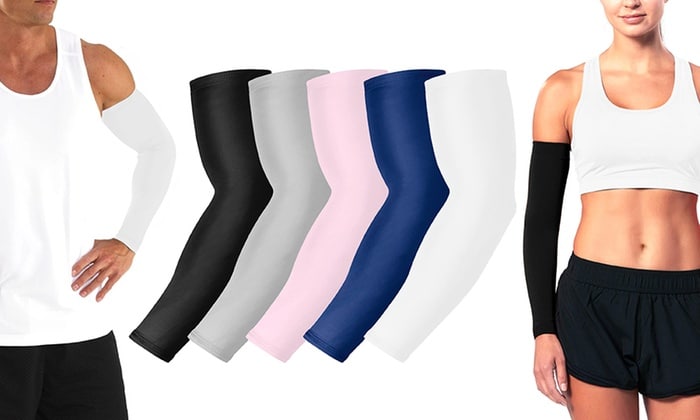
You might find that when you fly or are high up in the mountains that your ankles tend to swell, and when you are at true sea level your ankles are ‘normal’. This is due to atmospheric pressure. Compression is measured in millimeters of mercury (mmHg) at the ankle. This measures the atmospheric pressure at your ankle, and tells us how hard your blood and lymphatic systems have to work to pump your blood and lymph back to your heart. When you are standing still for a long period of time (think cashiers, teachers, nurses, flight attendants, etc) the pressure at your ankles are 90 mmHg. When you are sitting still for a long period of time (think office workers, students, etc) it is around 65 mmHg. Walking drops the pressure down to about 35 mmHg (yay mail carriers!). Sleeping drops it even further to about 10-15 mmHg with very little pull from gravity. Veins actually work at about 15 mmHg, which is why you might wake up with ‘normal’ ankles and go to bed with swollen ankles. What all these numbers tell us is basically how your veins work below your knee, how hard they have to work to get your blood back to your heart, and the level of compression you may need to help address your swelling.
Varicose veins and spider veins can happen to anyone at any age (you can even be born with varicose veins !). While 70-80% of venous patients are typically female, vein problems can affect men as well. Estrogen and Progesterone are vasodilators, which basically means that they can cause your veins to swell more often and for longer. The means that the valves in your veins cannot close properly, which allows blood and lymph to pool in your legs. Puberty, birth control, pregnancy, and menopause can all be leading contributors to varicose and spider veins. Fear not, as a simple pair of compression socks, thigh highs or pantyhose can help manage your veins. In fact, studies have shown that wearing medical grade (20-30 mmHg or higher) compression for 6 months and doing gentle ankle and calf exercises can significantly reduce or even eliminate your venous symptoms.
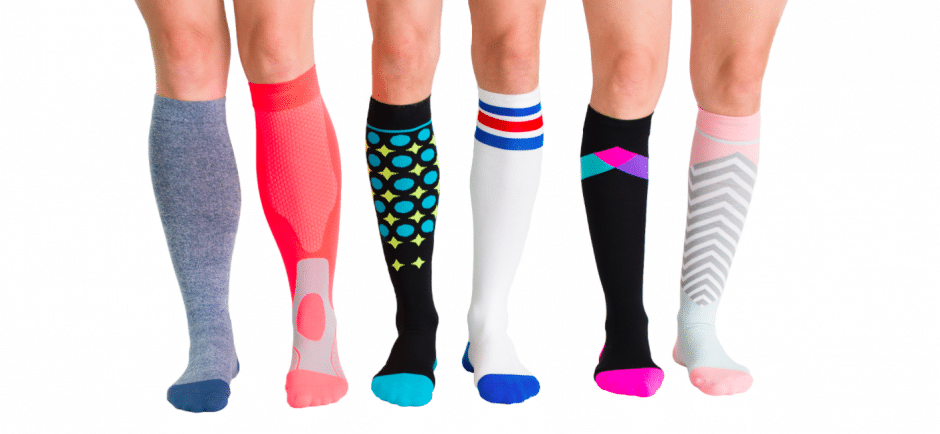
The socks that you see in a drugstore are known as ‘preventative’ strength compression. They measure at 15-20 mmHg. These socks are good if you have a fairly normal venous and lymphatic system, and just want to wear them if you fly or swell very occasionally.
Medical grade socks start at 20-30 mmHg of compression. If you have any of the symptoms we talked about at the beginning of this article, it might be worth seeing your doctor for a compression garment prescription. Most private insurance companies will cover 2 pairs of ‘below the waist’ compression for almost all of their plan members. A quick call to customer service is all it takes to find out!
